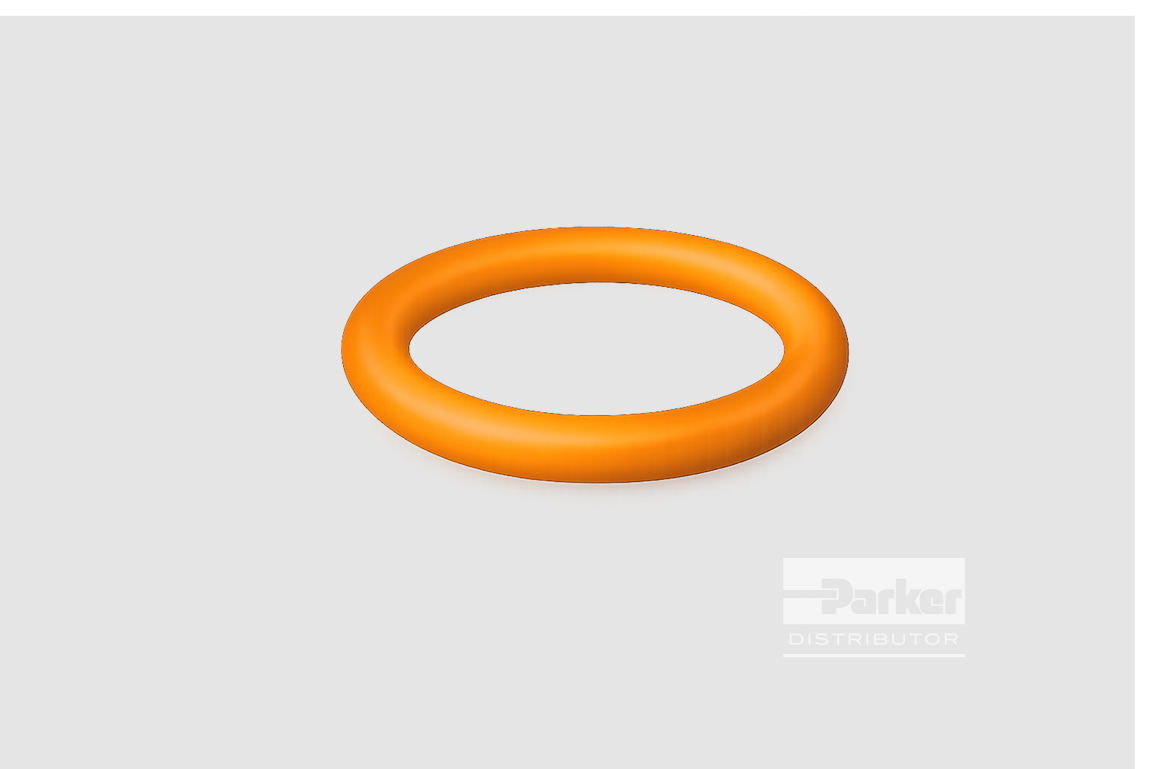
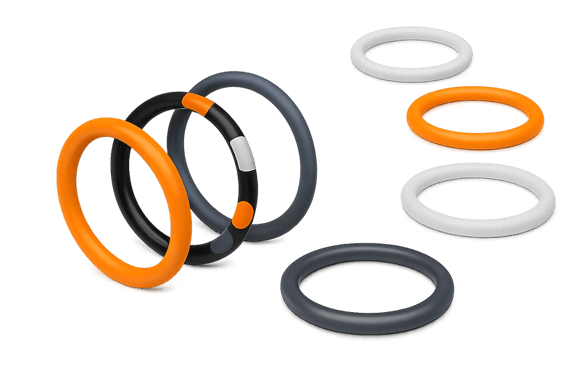
Darcoid has been a Parker O-ring distributor since 1954. We supply competitively priced new and replacement parts made with premium materials. Most standard size O-rings are available in stock and custom sizes can be ordered.
Parker also provides engineered and custom solutions, including:
Governing Standards
ISO 3601, AS 568B, DIN 3771, JIS
Common Material Certifications
Aerospace Material Specifications (AMS), United States Military Standard (MIL-STD), ASTM, SAE.
Specialty Standards
National Sanitation Foundation (NSF), United States Pharmacopeia (USP), Underwriter Laboratories (UL).
Parker O-ring Catalog
& Size Charts
Access official Parker documentation to find the exact part for your needs.
O-rings can be used in many different types of static or dynamic applications, and can act as a piston seal, rod seal, or face seal.
To maximize durability and longevity, it's important to use a proper sized seal, choose a compatible material, and follow recommended hardware design guidelines.
Compared to a custom solution, Parker O-rings are inexpensive and a wide variety of sizes are available without requiring a tool purchase.
A proper size O-ring and material selection maximizes functionality and longevity for your application. This O-ring selector or the Parker O-ring Handbook can help you determine the right size and material. Don’t want to do the leg work? Contact us and we can recommend a solution for you.
O-rings are typically measured by the inner diameter and cross section. Measuring a used O-ring may affect the accuracy since the seal could have been subjected to application conditions such as compression set or extrusion. If the O-ring is difficult to measure, you can also use your hardware to determine the best size.
Alternatively, Darcoid can measure and determine the material that was used for you. Just send us a sample!
Depending on the application, seals could last the lifetime of the product or may need to be replaced after a certain amount of time or use. Application testing is the best way to estimate the life cycle of the seal and helps develop a preventative maintenance interval, so the seals can be proactively replaced instead of having to react to a failure.