


Seals and Gaskets are found across aircraft and related platforms, including:
- Aircraft engine components
- Landing gear
- Hydraulic lines
- Fuel pumps
- Brakes
- Electronic enclosures
- Doors and hatches
Aerospace and defense seals live through temperature swings, vibration, and aggressive fluids often in the same mission cycle. The total program cycle is also quite long, requiring specs, materials, and suppliers to stay stable for years.
Darcoid helps engineers select seal profiles, materials, and processes that hold up in real duty cycles. With 75+ years of sealing experience, AS9100-aligned suppliers, and MIL-SPEC support, we can move from prototype to production without losing control of the spec.
Urgent Need? Late-stage leak, wear, or compression set problem? We’ll help you isolate the root cause and find a fix that fits your constraints.


Seals and Gaskets are found across aircraft and related platforms, including:



Engines, landing gear, hydraulics, fuel, brakes, doors/hatches, enclosures.

Missiles, radar, weapons systems, ground vehicles, UUVs.

Propulsion, cryogenic fuel, vacuum interfaces, life support, thermal zones.

UAVs, autonomous platforms, long unattended run time, weight limits.
Versatile, cost-effective sealing solutions for both static and dynamic applications, offering reliable performance across a wide range of pressures and temperatures.
Primary Applications: Fuel Systems, hydraulic systems, connectors, and valve sealing.

Designed for static sealing between mating surfaces, gaskets provide consistent compression and environmental protection in structural assemblies.
Primary Application: enclosures, access panels, flanges, and electronic housing.
 Engineered for dynamic sealing around rotating and reciprocating shafts, these seals retain lubricants while preventing ingress of contaminants.
Primary application: gearboxes, actuators, pumps, and landing gear systems.
 Provide high-performance sealing between rotating and stationary faces in demanding environments with extreme pressures, speed, & temperatures.
Primary Application: turbines, fuel pumps, compressors, and propulsion systems.
 Utilizing advanced materials such as PTFE, these seals deliver low friction, chemical resistance, and stability under extreme operating conditions.

Tailored sealing solutions designed to meet unique geometry, material, and performance requirements, where standard products fall short.
Primary Applications: Complex housing, EMI/IP sealing, and next-generation aerospace platforms.


Engage an Engineer
Need help narrowing material options for your fluid and temperature profile? Send your media, temperature band, and motion type and we'll recommend a short list.



Each seal profile has a pressure window. Some profiles, including U-cups, use system pressure to energize the sealing lips. Others, such as O-rings, can seal with little or no pressure.

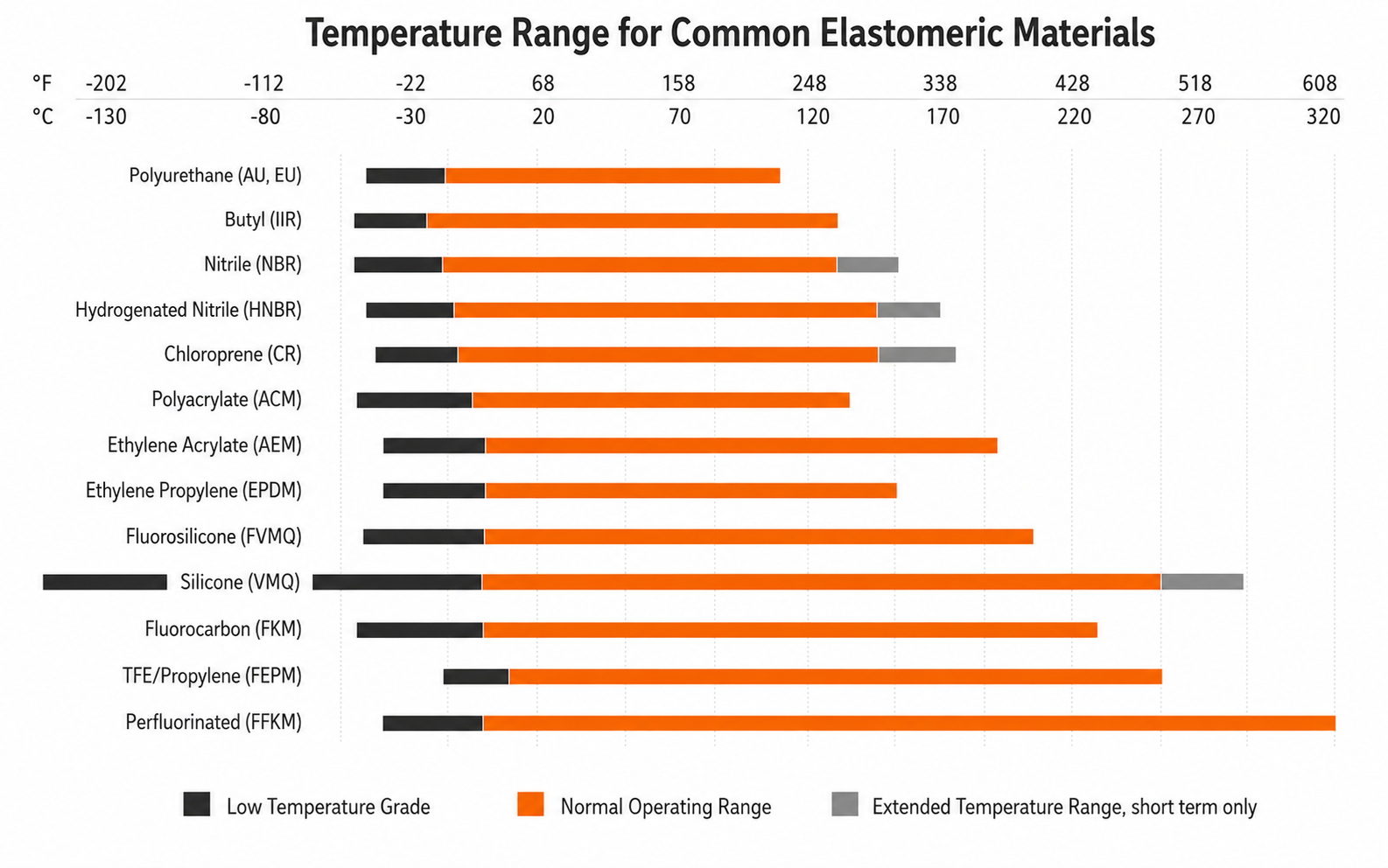
Every material family has a usable temperature range. Thermal Cycling can change sealing force over time due to compression set, hardening or brittleness.

If the material does not match the fluid, it can swell, shrink, or degrade. That can reduce sealing force and change fit, especially as hardware heats and cools.

Seals often do two jobs: keep fluids in and keep contaminants out. Dust, debris, moisture, and ice can accelerate wear in dynamic locations.
Aerospace & defense programs need repeatable performance over long timelines. That means controlled processes, traceability, and change discipline, not just a first build.
Quality & Performance

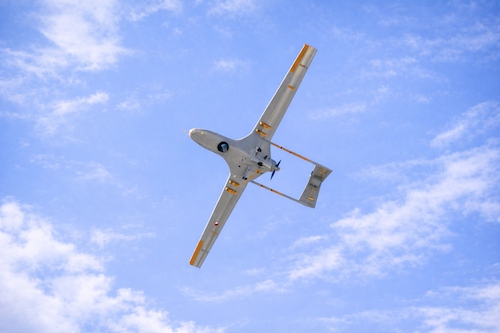
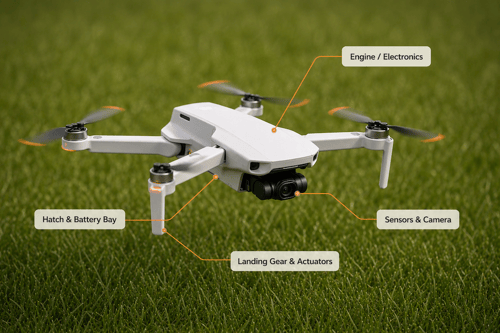

Seals often protect sensors, electronics, and connectors while staying lightweight. Many designs must handle outdoor exposure, vibration, and frequent temperature changes without regular maintenance.

Sealing is driven by pressure at depth, saltwater resistance, and long-term immersion. These systems may also need reliable environmental sealing for electronics housing and connectors over long deployments.

Seals may sit through long storage, then see rapid temperature shifts and high G-forces at launch. Stable materials, controlled tolerances, and repeatable processes matter when field maintenance is not an option.

Hours to days
Stamping a 2D shape from a material sheet through shearing force. Die made with cold-rolled steel; cuts rubber and plastics.
2 weeks
Pre-heated charge placed into two-part mold. Heat and pressure cause the charge to take the shape of the mold and cure.
4 to 6 weeks
Material heated into liquid state, compressed into a cavity. Mold cools, rubber solidifies, part ejects ready for the next cycle.
2 to 4 weeks
Raw material fed into a screw chamber with high heat, then flows through a die of the desired profile.
4 to 6 weeks
Cutting tools remove excess material from a raw billet. Common for plastic seals requiring tight tolerances.
Same-day Shipping
Large in-stock inventory of standard O-rings and profiles available for immediate needs.


Urgent seal performance problem?
Contact us now for expedited prototyping and delivery.

Quality comes first with Darcoid. Nothing moves without Quality's approval. Our team is driven to assure zero defects with control plans aligned to your quality process manual.
Darcoid has maintained ISO 9001 registration since 2002 and is certified to IATF 16949:2016. We also work with ITAR- and AS9100-certified downstream suppliers and support aerospace-specific quality requirements, including FAI, lot traceability, control plans, and MIL-SPEC requirements where applicable.
If you're visiting this page because you are dealing with recurring quality escapes, please contact us and book time with our QA experts. Our QA team has developed a wealth of seal quality expertise over the years. We know where and how escapes can happen at every step of the manufacturing process and what controls need to be in place and verified.
Dealing with recurring quality escapes? Book time with our QA experts.

Identifying and controlling "performance creep" for future builds
A critical part of your program's success is ensuring the seal that will be assembled into your product 4 or 5 years from now performs the same as the seal you qualify for production release.
Aerospace seal specs are among the most precise of all industries, but small omissions or assumptions in your control specs can still create major headaches in the future. Flow-down requirements only work if they are comprehensively flowed down your supply chain.
We can help audit your specs from an outsider's perspective and show where you may be risk-exposed or, conversely, over-spec'd. Darcoid Applications Engineers will share some additional seal performance-creep mitigation steps we've developed so you can rest easy and focus on developing your next great application!


Reliable, predictable lead times
Ship anywhere in the world
Consignment, VMI, Kanban, scheduled releases
Easy to do business with, align with customer procurement models
Minimize customer inventory carrying costs
For critical situations
Darcoid has been in business for 75 years, and over that time we have come to recognize one simple truth: The performance of your product is directly related to the quality and reliability of the seal.
With those words in mind, we continue to innovate and collaborate with customers whose products change the world for the better. To deliver meaningful and measurable value to your entire organization, we have built and deployed the powerful Next Level® strategy - by deliberately integrating with your teams in quality, seal technology, fulfillment services and growth strategy. True Partnership, measured, managed.
We're looking forward to earning your trust and becoming your go-to seal solutions provider.




You need to get your best product designed, validated, specified, ramped and released. We’ve got your back, from concept through zero defect supply programs. It starts with understanding what you need the seal to do. We’re ready to get started.