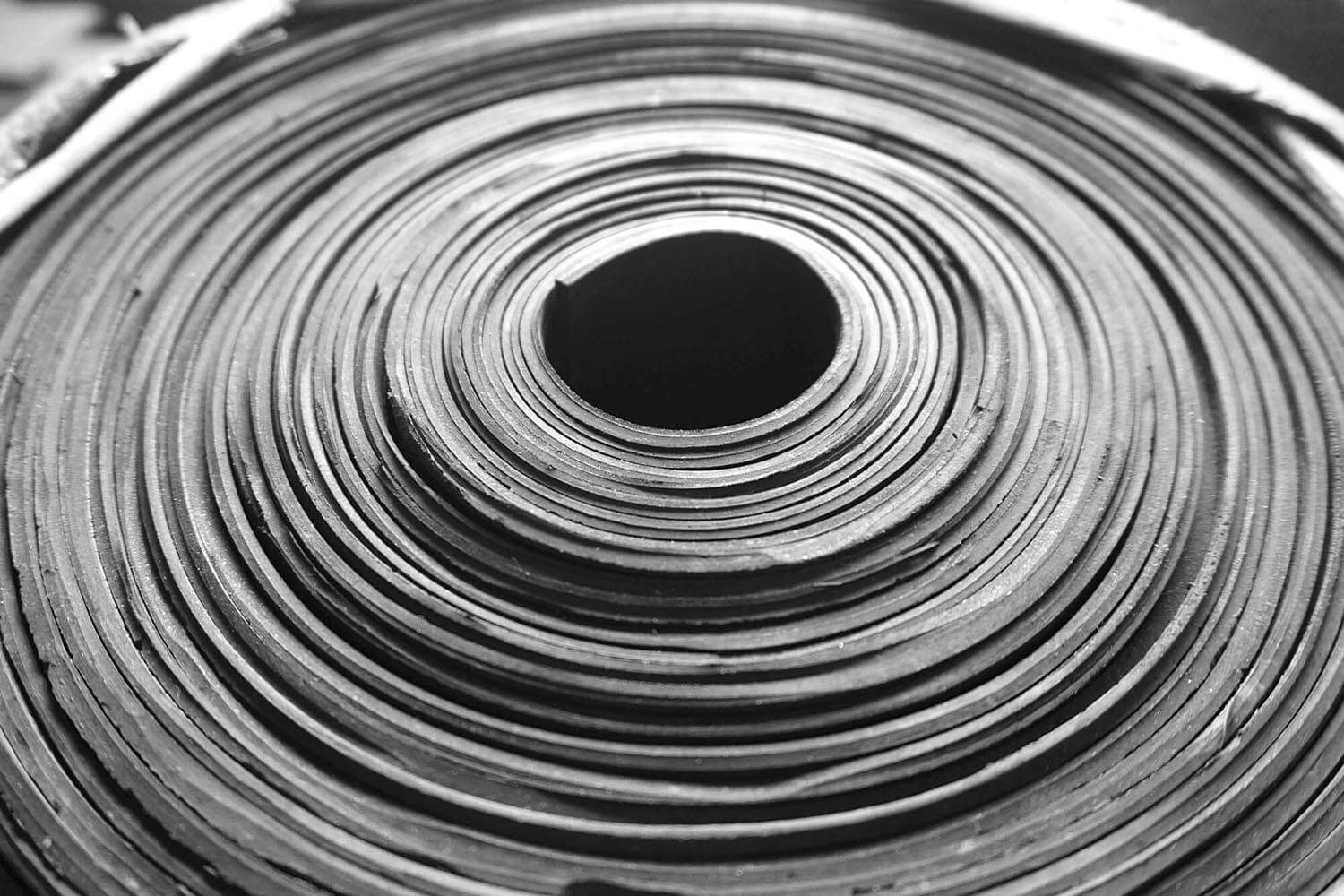
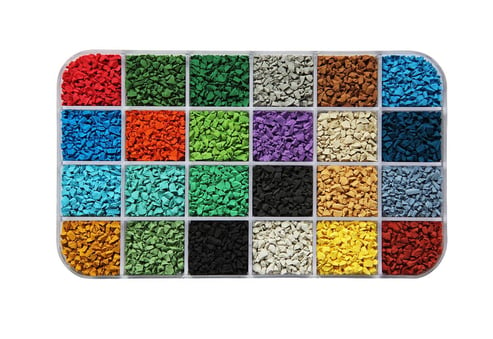
So much more than "black rubber"

“Rubber” is a broad term for polymer-based compounds that are cured, or vulcanized, to form thermoset elastomers. These materials are grouped into more than a dozen major elastomer families, and within each family there can be hundreds of individual formulations engineered for specific operating conditions and performance requirements.

Common and specialty elastomer families include:

  • FKM fluorocarbon elastomers, including Viton™
  • EPDM / EPR
  • NBR / Buna-N
  • HNBR
  • XNBR
  • Polyurethane (AU)
  • Silicone (VMQ / LSR)
  • Fluorosilicone (FVMQ)
  • Butyl (IIR)
  • AFLAS® / FEPM
  • FFKM perfluoroelastomers, including Kalrez®, Chemraz®, Parofluor®, Ultra®, and Perlast®

Within each polymer family, formulations can be optimized for properties such as wear resistance, extrusion resistance, low compression set, low-temperature flexibility, reduced friction, and explosive decompression resistance (EDR).

The right material depends on more than the polymer family alone. Compound formulation, media compatibility, temperature, pressure, motion, hardware design, regulatory requirements, and expected service life all influence seal performance.

gfx-grid-left-style17

Regulatory and industry requirements

Many elastomer compounds are available in formulations designed to support regulatory and industry requirements such as FDA 21 CFR 177.2600, USP Class VI, 3-A sanitary requirements, WRAS, and animal-derived ingredient (ADI) declarations.

For FDA food-contact applications, compliance depends on the specific compound and intended use. Under 21 CFR 177.2600, applicable requirements may include:

  • Paragraphs A–D: Ingredient and quantitative limitations; generally associated with dry food applications
  • Paragraphs A–E: Includes extraction testing for dry and aqueous food-contact applications
  • Paragraphs A–F: Includes requirements applicable to dry, aqueous, and fatty food-contact applications

Specific regulatory status should always be confirmed for the exact compound and application before specification.

And engineered thermoplastics

Where media, pressures, and dynamics drive material selection beyond elastomers we move into engineered thermoplastics and metals (PTFE TeflonTM, PEEK, DelrinTM  acetal resin polyoxymethylene (POM), polyimide VespelTM, PFA, FEP, ETFE, ECTFE, PCTFE, PVDF, etc.).

Engage with our technical team to take the guesswork out of material selection.

  • Aflas is a registered trademark of Asahi Glass Co., Ltd
  • Chemraz is a registered trademark of Greene, Tweed Technologies, Inc.
  • Delrin is a registered trademark of Dupont Polymers, Inc.
  • Kalrez is a registered trademark of Dupont Polymers, Inc.
  • Parofluor, Ultra are registered trademarks of Parker Hannifin Corporation
  • Perlast is a registered trademark of Precision Polymer Engineering Limited.
  • Teflon is a registered trademark of the Chemours Company
  • Vespel is a registered trademark of Dupont Polymers, Inc.
  • Viton is a registered trademark of the Chemours Company
Thermoplastics
grid pattern full
grid pattern box

Material Family Guide

*Typical family ranges shown for quick reference only. Actual performance depends on compound, media, pressure, hardware, motion, and required life. Regulatory compliance is compound- and application-specific; availability of a compliant formulation should be confirmed for the exact material, hardness, configuration, and intended use.

Material Family Typical Service Temperature* Best For  Use Caution / Not Ideal For Common Seal Formats
NBR / Buna-N -40 to +250°F Petroleum oils, fuels, hydraulics, and general industrial service

Ozone, weathering, UV exposure; verify modern fuel blends and aggressive chemicals by compound

O-rings, x-rings, custom molded shapes, gaskets
HNBR -40 to +300°F Hot oils, fuels, refrigerants, and higher-heat dynamic service

Verify fuel, sour-gas, chemical, and low-temperature requirements at the compound level

O-rings, hydraulic seals, custom profiles
EPDM -60 to +250°F Water, steam, glycol fluids, ozone, and outdoor service

Petroleum oils and hydrocarbon fuels; verify cure system for steam/hot-water service

O-rings, sanitary seals, gaskets, custom extrusions
VMQ / Silicone -80 to +450°F Very wide temperature exposure, food/medical options, static seals

Abrasion and tear resistance; validate dynamic service, oils, and repeated steam exposure

O-rings, gaskets,  molded shapes
FVMQ / Fluorosilicone -80 to +350°F Low-temp fuel and oil resistance, aerospace/military environments Higher wear/dynamic abuse than tougher elastomers O-rings, specialty aerospace seals
FKM / Fluorocarbon -20 to +400°F Chemicals, fuels, oils, and high-temperature sealing

Prolonged steam/hot water, amines and ketones in many grades; specialty compounds may differ

O-rings, x-rings, gaskets, custom molded shapes
FFKM / Perfluoroelastomer 0 to +550°F Extreme chemicals, high purity, plasma, high-cost downtime environments Cost-sensitive applications O-rings, specialty custom seals
PTFE -300 to +500°F Broad chemical resistance, low friction, non-stick surfaces Elastic recovery; often best in spring-energized designs Backup rings, spring-energized seals, machined seals
PTFE Encapsulated Depends on core + jacket Chemical resistance with elastomer-like geometry Dynamic applications, tight bend radii, and some compression-set limitations Encapsulated O-rings, D-rings, square rings
AFLAS / TFE-P 15 to +450°F Sour gas, amines, steam, aggressive oil & gas media

Low-temperature service; verify aromatic/chlorinated solvent compatibility by compound

O-rings, engineered oil & gas seals
Polyurethane -40 to +225°F Abrasion resistance, extrusion resistance, and hydraulic sealing

High heat relative to FKM/FFKM; hydrolysis resistance varies by polyurethane chemistry

U-cups,   rod seals, piston seals, custom profiles
Neoprene / CR -40 to +250°F Refrigeration, moderate weathering, general-purpose industrial service Premium chemical/high-temp duty O-rings, gaskets, molded shapes


gfx grid bgstyle1
gfx grid bgstyle1m

FAQs

There is no universal best material. Start with media, temperature, pressure, motion, gland design, and required approvals, then select and validate a specific compound. A sealing engineer can narrow the shortlist quickly once the application inputs are known.

FKM is the ASTM polymer-family designation for fluorocarbon elastomers. Viton™ is a Chemours brand of FKM. Not every FKM compound is Viton, and FKM compounds within the family do not all perform the same: cure system, fluorine content, and formulation all affect properties.

EPDM is generally not recommended for petroleum oils or hydrocarbon fuels. It is typically selected for water, glycol fluids, ozone, outdoor service, and qualified hot-water or steam applications. If oil compatibility is also needed, a different elastomer family is required.

Silicone generally has poor tear and wear resistance relative to other elastomers. Dynamic use is possible under engineered conditions with the right compound, design, and lubrication, but it is an exception to validate, not a default. FKM or HNBR are more common choices for dynamic duty.

Consider FFKM when the consequence of failure exceeds the material premium: aggressive chemistry, high purity requirements, plasma environments, or situations where downtime cost dominates. The specific grade still needs to be matched to the application; FFKM is not a uniform specification.

Yes. PTFE-based static gaskets are widely used. The design must account for creep relaxation, joint load, thermal cycling, and the specific PTFE form - filled, expanded, sheet, or spring-energized. Spring-energized seals are one solution for thermally cycled applications; they are not the only option.